
Foot health, explained
About Podology
Podology (also known as podiatry or chiropody in some countries) is the specialised care of the feet, ankles, and lower limbs. It sits at the crossroads of medicine and beauty care — combining clinical treatment with the kind of attention that leaves your feet looking and feeling their best.
What is podology?
Podology focuses on the health of the skin, nails, and structure of the foot. A podologist treats conditions such as fungal nails, ingrown nails, thickened or deformed nails (onychogryphosis), calluses, corns, cracked heels, and plantar warts — as well as providing hygienic and cosmetic pedicures and manicures for everyday care.
Who is a podologist?
A podologist is a specialist trained specifically in foot and nail health. Unlike a standard nail technician, a podologist is trained to recognise medical conditions of the feet, work safely on at-risk skin (including diabetic feet), use clinical-grade tools, and follow strict hygiene and sterilisation protocols. Maria's training follows the Ukrainian medical education tradition in podology, known for its thorough, clinical approach to foot health.
What to expect at a visit
Consultation
We start by discussing your concerns, medical history, and any areas that feel painful or look different.
Examination
A close look at your skin, nails, and foot structure to identify the cause of any issue — not just the symptom.
Treatment
Using sterile, medical-grade tools, we carry out the treatment gently and thoroughly, explaining each step as we go.
Aftercare
You leave with clear, simple advice on how to maintain results and prevent the issue from returning.
Common conditions we treat
Fungal nails
Thickened, discoloured, or crumbling nails caused by fungal infection, treated to restore healthy growth.
Ingrown nails
Safe, precise correction of nails growing into the skin, relieving pain and preventing infection.
Calluses & corns
Gentle removal of built-up hard skin for smoother, more comfortable feet.
Cracked heels
Targeted treatment to heal painful cracks and restore soft, supple skin.
Plantar warts
Safe, professional removal of warts caused by HPV — especially common in children and teenagers.
Onychogryphosis
Care for thickened, curved, or deformed nails, often related to age, injury, or fungal infection.
Noticed a bump on your child's foot?
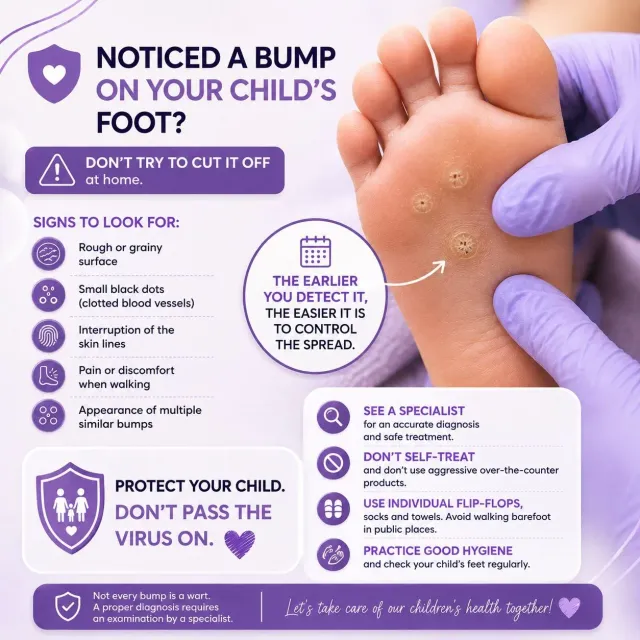
Don't try to cut it off at home
It can spread the infection, cause pain, and delay proper healing. Plantar warts need a professional diagnosis and safe treatment.
Signs to look for
- A rough or grainy surface on the skin
- Small black dots (tiny clotted blood vessels)
- A break in the normal lines of the skin
- Pain or discomfort when walking or standing
- Several similar bumps appearing nearby
The earlier you catch it, the easier it is to treat
See a specialist
for an accurate diagnosis and safe treatment.
Don't self-treat
and avoid aggressive over-the-counter products.
Use individual footwear
socks, and towels — avoid walking barefoot in public places.
Practise good hygiene
and check your child's feet regularly.
Not every bump is a wart — a proper diagnosis always requires an in-person examination by a specialist.
Let's take care of our children's foot health together.
Have a question about your feet?
Get in touch and we'll be happy to help before you even book.
Contact us